
Kadiyali Mahishamardini Temple: History, Ancient Idol & Travel Guide
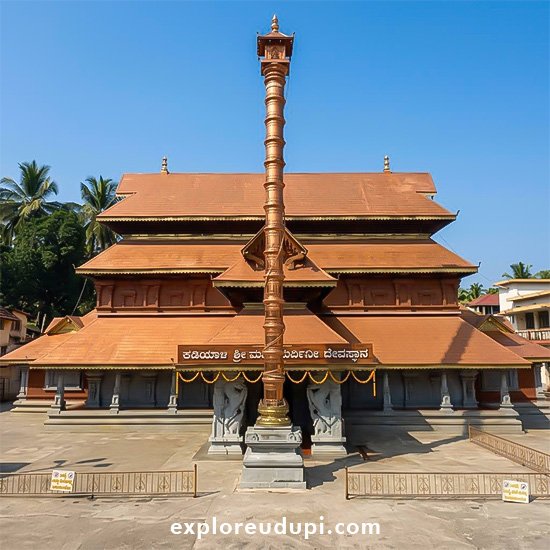
Located just 1.2 kilometers from the heart of Udupi, the Kadiyali Mahishamardini Temple is one of the most ancient and revered Shakti worship centers in Karnataka. Dating back to the 7th century, it is historically older than the famous Udupi Sri Krishna Matha and is renowned for its profound Chalukyan-style black stone idol and newly integrated architectural marvels.
At a Glance: Quick Facts & Timings
| Visitor Info | Details |
|---|---|
| Proximity to Udupi | 1.2 km from Udupi city center and Sri Krishna Matha. |
| Proximity to Airport | Mangaluru International Airport is roughly 60 km away. |
| Standard Daily Timings | 5:00 AM – 1:00 PM | 4:00 PM – 8:00 PM. |
| Friday Specials | Special poojas and traditional Anna Prasada Seve draw large crowds of devotees. |
| Architectural Marvel | Features Karnataka's first-ever revolving temple ceiling. |
Deep History: The Chalukyan Legacy
- Origins & Antiquity: According to renowned historian and archaeologist Dr. P. Gururaja Bhatt, the temple dates back to the 7th century (circa 600 AD). This makes it as ancient as the Sri Ananteshwara Temple and establishes it as predating the founding of the Udupi Sri Krishna Matha.
- The Roots of Kadiyali: Regarded as one of the oldest Shakti Peethas in the South Kanara region, the area has served as a prominent center of Devi worship with a spiritual legacy spanning over 1,200 years.
Architectural & Iconographic Brilliance
The temple seamlessly blends ancient iconographic strictures with breathtaking modern woodcraft innovations.
The Sanctum and the Ancient Idol
- The Mahishamardini Vigraha: Standing at roughly two feet tall, the idol is meticulously carved from smooth, hard black stone in the distinctive Badami Chalukyan style.
- Unique Iconography: The four-armed Goddess holds the Prayaga Chakra (discus) and Shankha (conch) in her upper hands. Her lower right hand pierces the head of the buffalo-demon Mahishasura with a Trishul (trident), while her lower left hand pulls his tail. Despite this fierce act of slaying the demon, the Goddess's face bears a completely calm, effortless expression—symbolizing that vanquishing evil is mere child's play for the divine.
Modern Renovations
- The Revolving Ceiling: During contemporary renovations designed to preserve its ancient charm while accommodating modern devotees, the temple installed Karnataka's first revolving wooden ceiling. This unique feature is a magnificent blend of traditional heritage carving and modern engineering.
Major Festivals & Spiritual Practices
- Friday Rituals: Fridays hold immense significance at Kadiyali. The temple comes alive with rhythmic chants, special poojas, and the highly anticipated Anna Prasada Seve (sacred food offering) for all visiting devotees.
- Navratri Celebrations: Being a primary Shakti temple, the nine days of Navratri and Dussehra are celebrated with unmatched grandeur. The festival features special Alankaras (decorations), traditional music, and vibrant cultural festivities that reflect Karnataka's rich heritage.
Frequently Asked Questions (FAQs)
What are the daily darshan timings for Kadiyali Mahishamardini Temple?
The temple is generally open for darshan from 5:00 AM to 1:00 PM and from 4:00 PM to 8:00 PM daily.
How far is the temple from the Udupi Sri Krishna Matha?
The temple is located very close to the main city center, approximately 1.2 kilometers from the famous Udupi Sri Krishna Matha. It can be easily reached via a short auto-rickshaw ride or even a walk.
What makes the Mahishamardini idol here so unique?
It is a 7th-century, 2-foot-tall black stone sculpture carved in the ancient Badami Chalukyan style. It uniquely depicts the Goddess holding the demon Mahishasura by the tail while piercing his head with a trident, yet her facial expression remains completely calm, showing no signs of exertion.
Is there a dress code for visiting the temple?
Like most traditional temples in the Udupi region, visitors are expected to wear modest, traditional Indian attire. Men typically wear pants or traditional dhotis, while women are encouraged to wear sarees, salwar kameez, or long ethnic dresses.