
Sri Amrutheshwari Halavu Makkala Thayi Temple, Kota: History, Legends & Travel Guide
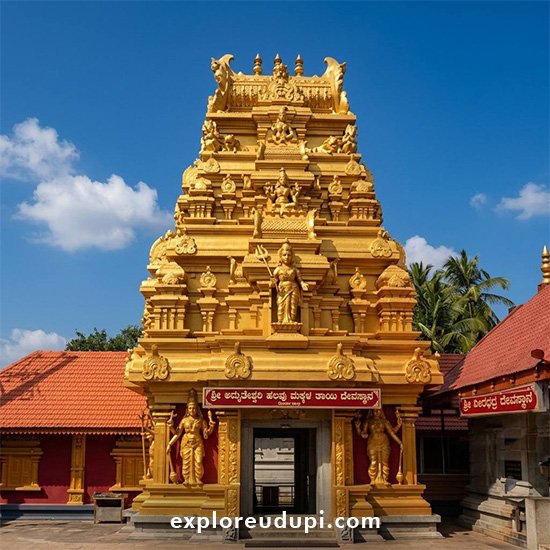
Sri Amratheshwari Halavu Makkala Thayi Temple Located in the town of Kota directly along National Highway 66, the Sri Amrutheshwari Temple holds a profoundly unique and maternal place in coastal Karnataka's spiritual landscape. Affectionately revered as Halavu Makkala Thayi (The Mother of Many Children), this 450-year-old temple is deeply trusted by childless couples seeking the blessing of parenthood and is famous for its mysteriously manifesting Shivalingas.
At a Glance: Quick Facts & Timings
| Visitor Info | Details |
|---|---|
| Location / Proximity | Kota, Udupi District (situated conveniently on NH66, Fisheries Road, between Udupi and Kundapura). |
| Standard Daily Timings | 6:00 AM – 2:00 PM | 3:00 PM – 8:00 PM. |
| Key Deities Worshiped | Goddess Amrutheshwari, Sri Rakteshwari, Goddess Marikamba, God Veerabhadra, and various local Daivas. |
| Friday Specials | Fridays are highly auspicious and feature grand Anna Prasada (sacred food offerings) for visiting devotees. |
| Cultural Patronage | Home to the famous traditional theater troupe, the Kota Amrutheshwari Yakshagana Mandali. |
Architecture & Subsidiary Shrines
Beyond its spiritual draw, the temple is an architectural marvel of coastal Karnataka, featuring beautiful traditional wooden pillars and intricate wood carvings that create a serene, ancient ambiance. The Goddess Amrutheshwari is accompanied by an array of powerful subsidiary deities. Right in front of the main deity stands the idol of Sri Rakteshwari. The sprawling complex also houses shrines dedicated to Goddess Marikamba, Lord Veerabhadra, Nagashila, and prominent wooden idols of local Daivas (spirit deities) including Bobbarya, Ummalti, Chikku, Nandi, and Panjurli. This diverse congregation of deities beautifully reflects the deep, syncretic nature of Tulu Nadu worship traditions.
Deep History: The Legend of the Childless Curse
The origins of the temple are steeped in the ancient mythological era of Dandakaranya, intertwining with characters from the Ramayana epic.
- A Fatal Encounter: The tragic origins of the childless curse begin with a sage's widow named Atiprabha, who was journeying on a pilgrimage to Kashi with her virtuous, educated son, Bahushruta. During their travels through the forest, they crossed paths with Shoorpanakha, Ravana's sister.
- The Curse of Kumbhamukhi: Infatuated by the handsome young man, Shoorpanakha proposed to him. When Bahushruta firmly rejected her advances, a furious Shoorpanakha attacked and killed him. Overcome with grief and blinding rage, Atiprabha lashed out and mistakenly cursed Kumbhamukhi—the pious wife of the demon Kharasura, who ruled the region—condemning her to eternal barrenness.
- The Penance: To break this devastating curse, Kharasura sought the guidance of Sage Shukracharya and procured a Jyesta Linga carved instantly by Mayasura. Meanwhile, Kumbhamukhi performed severe, devoted penance to Goddess Amrutheshwari, completely giving up food and sleep.
- The Blessing: Moved by her devotion, the Goddess appeared, broke the curse, and granted her children. Since then, the deity took on the divine epithet Halavu Makkala Thayi, becoming the ultimate refuge for couples facing fertility issues.
Mystical Phenomena & Unique Offerings
The Swayambhu Shivalingas
- Spontaneous Manifestations: The temple grounds are famous for a highly unusual phenomenon. Around the outer precincts of the Garbhagudi (inner sanctum), rough stone Shivalingas (Swayambhu or Atma Lingas) spontaneously emerge from the earth. According to temple authorities and local devotees, a new Linga emerges directly from the soil approximately once every three years—a mystical occurrence that continues to defy scientific explanation.
- Varuna Theertha: Just to the south of the main temple stands the sacred temple pond, Varuna Theertha, enhancing the spiritual ambiance of the premises.
The Ritual of Oil and Horse Gram
- Applying Oil: When a childless couple's prayers are answered, parents return to fulfill their vow (Harake). A unique and touching ritual involves parents applying oil to the Swayambhu Shivalingas, tenderly rubbing it in exactly as a mother would massage oil onto her own child's head.
- Horse Gram Offering: Devotees also offer Kudu (Horse Gram) to the Goddess as a traditional sign of gratitude and protective blessing for their children.
- Other Sevas: Thulabhaara Seve (weighing a child against offerings) and Belakina Seve (light offerings) are incredibly popular among grateful parents.
Frequently Asked Questions (FAQs)
Why is the Goddess called "Halavu Makkala Thayi"?
The name directly translates to "The Mother of Many Children" in Kannada. Goddess Amrutheshwari earned this title because countless devotees who arrived childless were subsequently blessed with offspring after praying at this very shrine.
What are the special offerings (Harake) made at this temple?
The most distinctive offering is giving horse gram (kudu) and oil to the Goddess. Devotees tenderly apply the offered oil to the naturally occurring Shivalingas around the temple as a gesture of maternal love and gratitude.
What is the cultural significance of the temple?
Beyond its religious importance, the temple is a massive patron of local coastal arts. It proudly hosts the Kota Amrutheshwari Yakshagana Mandali, a renowned traditional theater troupe that performs vibrant, night-long mythological dramas, keeping Karnataka's rich performing arts alive.
How to reach the temple?
The temple is incredibly easy to access as it sits directly off National Highway 66 (Fisheries Road) in Kota, roughly midway between Udupi and Kundapura. Ample parking is available just about 100 meters down from the main temple entrance.