
Mattu and Padukere Beaches: The Bioluminescent Coast, Backwaters & Travel Guide
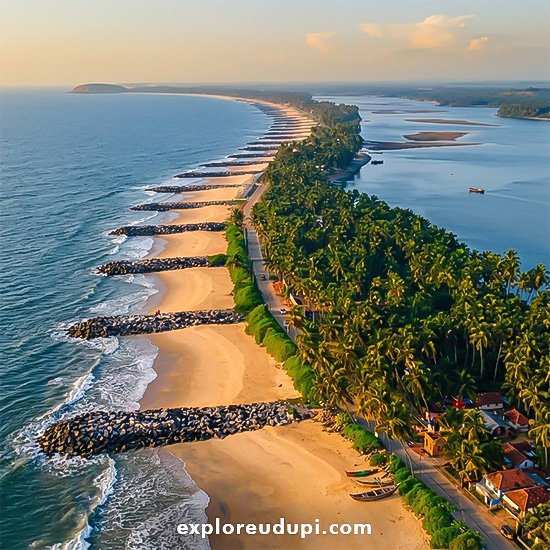
While the coastal town of Udupi is famous for the bustling sands of Malpe and the geological wonders of St. Mary’s Island, its true coastal magic lies hidden just a few kilometers away. Mattu Beach and its northern neighbor, Padukere Beach, form one of the most stunning, unspoiled stretches of coastline in Karnataka. Known for a breathtaking topographical anomaly where a serene backwater river runs parallel to the roaring Arabian Sea, this coastal belt offers absolute tranquility.
Mattu Beach has recently shot to global fame for its mesmerizing bioluminescence, while Padukere offers a pristine, crowd-free alternative to Malpe. Whether you are an astrophotographer chasing glowing waves, a cyclist looking for the ultimate coastal route, or a traveler seeking solitude, the Mattu-Padukere stretch is a quintessential Udupi experience that perfectly balances ecological wonder with local cultural heritage.
At a Glance: Quick Facts & Visitor Info
| Travel Info | Details |
|---|---|
| Proximity to Udupi | Mattu is ~10 km from Udupi (via Katapadi). Padukere is ~6 km from Udupi (via Malpe). |
| Key Attractions | Bioluminescence, parallel backwaters, scenic drives, sunset photography, and kayaking. |
| Best Time to Visit | October to February. Visit on New Moon (Amavasya) nights for the best bioluminescence viewing. |
| Commercialization | Very Low. Minimal shacks or facilities; visitors are advised to carry their own water and snacks. |
| Local Specialty | The famous GI-tagged "Mattu Gulla" (a unique, sweet variety of green brinjal/eggplant). |
Mattu Beach: The Glowing Coastline
Mattu Beach, located off the Katapadi junction on National Highway 66, is a long, secluded stretch of golden sand flanked by swaying coconut palms. Unlike typical commercial beaches, Mattu offers an immersive nature experience. The drive to the beach itself is spectacular, featuring a narrow, well-paved road with the Udyavara River flowing gently on one side and the vast expanse of the Arabian Sea crashing on the other.
The Phenomenon of Bioluminescence
In recent years, Mattu Beach has become Karnataka's premier destination for witnessing marine bioluminescence. This magical phenomenon, often referred to as "Sea Sparkles," transforms the crashing ocean waves into a glowing, neon-blue spectacle under the night sky.
- The Science: The glow is caused by a species of marine phytoplankton (dinoflagellates) called Noctiluca scintillans. When disturbed by the crashing waves or the movement of boats, these microscopic organisms emit light through a chemical reaction, creating a glowing blue trail.
- When to see it: The bioluminescence is entirely seasonal and natural, meaning it cannot be guaranteed. However, the highest chances of witnessing it are between October and January. It is best viewed late at night during a New Moon (Amavasya) phase, as the absence of moonlight makes the blue glow significantly more visible.
- Photography Tips: To capture the glow, you will need a DSLR or a high-end smartphone capable of long-exposure photography. Use a tripod, set a low shutter speed (10 to 15 seconds), open the aperture wide, and bump up the ISO.
Cultural Heritage: The Legend of Mattu Gulla
Mattu is not just famous for its beach; it is a vital agricultural and cultural landmark. The village is the exclusive home to the Mattu Gulla, a special variety of green, round brinjal (eggplant) that holds a Geographical Indication (GI) tag.
According to rich local lore, Sri Vadiraja Swamy of the Sode Matha (one of Udupi's Ashta Mathas) blessed the local farmers of Mattu with these specific seeds centuries ago to help them overcome famine. The vegetable is highly sought after for its unique flavor and is considered a sacred offering. During the famous Paryaya festival in Udupi, dishes made from Mattu Gulla are served as prasadam to the deity and devotees, forever linking this quiet beach village to the grand spiritual traditions of the Udupi Sri Krishna Temple.
Padukere Beach: Malpe’s Tranquil Twin
If you drive roughly 6 kilometers north along the coast from Mattu, or cross over the newly built bridge from the bustling Malpe harbor, you will arrive at Padukere Beach. For decades, Padukere was an isolated fishing hamlet accessible only by ferry from Malpe. The construction of the Malpe-Padukere bridge changed this, opening up a pristine stretch of beach that offers all the beauty of Malpe without the commercial chaos.
A Contrast of Atmospheres
Standing on Padukere beach, you can look across the water to see the crowded shores of Malpe, the bustling fishing harbor, and the distant silhouette of St. Mary's Island. Yet, on the Padukere side, the environment is intensely peaceful. The sand here is remarkably clean, golden, and largely untouched by heavy foot traffic. It is the perfect destination for travelers who find Malpe too crowded but still want to enjoy a vast, open coastline.
Backwater Kayaking & Eco-Tourism
While the sea at Padukere is beautiful, the backwaters that run parallel to the beach have become a hub for gentle eco-tourism. Local operators now offer kayaking and stand-up paddleboarding (SUP) in the calm waters of the estuary. Paddling through the winding mangrove patches, especially during the golden hours of sunrise or sunset, offers incredible opportunities for bird watching. Keep an eye out for Brahminy Kites, Kingfishers, and various species of Herons that call these mangroves home.
The Topographical Marvel: Between River and Sea
What truly unites the Mattu-Padukere stretch and makes it a must-visit is its unique geography. For several kilometers, a narrow strip of land—sometimes no wider than 50 meters—separates the saline Arabian Sea from the sweet, calm waters of the Swarna/Udyavara River.
Driving, cycling, or walking along this coastal road is an experience in itself. As you travel, you will hear the aggressive, rhythmic crashing of ocean waves on your right, while simultaneously observing the glassy, silent stillness of the backwaters on your left. The road is lined with dense coconut groves, traditional Mangalorean-tiled fishermen's houses, and small wooden boats moored in the river. This duality of landscapes in such close proximity is rare and provides one of the most scenic coastal drives in all of South India.
Travel Itinerary & Things to Do
- Coastal Cycling: The Udupi-Mattu-Padukere route is a dream for cyclists. Rent a bicycle from Udupi city early in the morning and ride down to Katapadi, cutting towards the coast. Riding along the flat, scenic road with the sea breeze is an unforgettable experience.
- Sunset Picnics: Since there are very few commercial establishments, Mattu and Padukere are perfect for private picnics. Pack a mat, some local Udupi snacks (like buns, goli baje, or chakkuli), and sit on the breakwater rocks to watch the sun dip below the Arabian Sea.
- Beach Walk to the Estuary: If you are up for a long walk, you can trek along the sand from Mattu all the way up to the Padukere estuary point, where the backwaters finally meet the sea.
- Night Photography: Stay well past sunset to try your hand at capturing the Milky Way, or on the right nights, the glowing blue bioluminescence.
Practical Travel Tips & Safety Guidelines
- Lack of Facilities: Unlike Malpe, there are no lifeguards, changing rooms, or major food shacks on Mattu or Padukere beaches. There are a few small local shops (gudis), but you must carry adequate drinking water, snacks, and any necessary supplies.
- Swimming Safety: The Arabian Sea along the Mattu stretch can have strong undercurrents and a steep drop-off. Because there are no lifeguards on duty, deep-sea swimming is highly discouraged. Limit your water activities to wading ankle-deep near the shore.
- Leave No Trace: The beauty of Mattu and Padukere lies in their pristine, untouched nature. Please be a responsible traveler. Carry a trash bag with you, collect all your plastic wrappers and bottles, and dispose of them properly once you return to Udupi city.
- Getting There: To reach Mattu, take NH66 towards Mangalore, turn right at the Katapadi junction, and drive for about 3 kilometers. To reach Padukere directly from Udupi, head towards Malpe and take the Padukere bridge just before the harbor.
Frequently Asked Questions (FAQs)
When is the exact time to see the bioluminescence at Mattu Beach?
Bioluminescence is a natural occurrence, so there is no guaranteed timetable. However, your best chance is during the post-monsoon and winter months (October to January). Plan your visit on a New Moon (Amavasya) night, or at least a few days before or after, when the sky is darkest. The glow is usually visible after 9:00 PM, once complete darkness sets in.
Can I walk from Mattu Beach to Padukere Beach?
Yes, technically, they are part of the same continuous coastline. However, it is a very long walk (roughly 5 to 7 kilometers along the sand). It is more practical to drive or cycle along the beautiful parallel coastal road that connects the two areas.
Is Padukere Beach safe for families and children?
Yes, Padukere is incredibly safe and peaceful, making it great for families who want to avoid the noise and crowds of Malpe. However, families must closely supervise children near the water, as there are no lifeguards stationed on the beach.
Are there places to stay right on the beach?
Commercial resorts are sparse compared to Malpe. There are a few boutique homestays and eco-resorts tucked into the coconut groves between the river and the sea, offering incredibly peaceful backwater views. Alternatively, you can stay in Udupi city or Malpe and make the short 15-minute drive to the beaches.
Why is the local brinjal (Mattu Gulla) so famous?
Mattu Gulla is renowned for its unique taste—it is less bitter, slightly sweeter, and has a thinner skin compared to standard brinjals. It is grown exclusively in the sandy, nutrient-rich soil of Mattu village using natural fertilizers like fish meal. It holds a Geographical Indication (GI) tag and is a crucial ingredient in traditional Udupi temple cuisine.