
Attractions › Karkala Gommateshwara Statue
Karkala Gommateshwara (Bahubali) Statue: History, Timings & Travel Guide
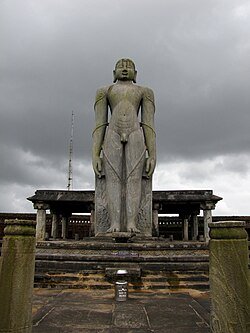
Rising from a bare granite hill above the temple town of Karkala in Udupi district, the Karkala Gommateshwara statue is a 42-foot monolithic figure of Lord Bahubali, carved from a single rock and installed in 1432 CE. It is the second tallest Bahubali monolith in Karnataka after Shravanabelagola, and the centrepiece of one of South India’s most important Jain pilgrimage towns.
This guide covers what you need before you go: the history and legend, the climb, realistic timings and costs, how to reach Karkala from Udupi and Mangaluru, the best season, nearby places, and the once-in-twelve-years Mahamastakabhisheka scheduled for 18–28 February 2027.
At a Glance: Karkala Gommateshwara Statue Key Facts
| Location | Gommata Betta (Gommateshwara Hill), Karkala, Udupi district, Karnataka 574104 |
| Statue height | About 42 ft (13 m), standing on a pedestal of roughly 5 ft; about 10 ft wide |
| Material | Single block of granite (monolith) |
| Installed | 13 February 1432 CE by Veera Pandya Bhairarasa Wodeyar |
| Distance from Udupi | Roughly 38–42 km, about an hour by road |
| Distance from Mangaluru | Roughly 55 km via Moodbidri |
| Visiting hours | Approximately 8:00 AM to 5:00 PM (confirm locally before you go) |
| Entry fee | No ticket reported for walk-in visitors; about ₹50 per car reported for driving up |
| The climb | Rock-cut steps; most visitor accounts say around 100–200 steps |
| Best time | October to February, early morning or late afternoon |
| Next Mahamastakabhisheka | 18–28 February 2027 (last held 21–31 January 2015) |
Compiled from public sources and visitor reports in October 2026. Hours, fees and festival arrangements can change, so check with the Karkala Jain Math or local authorities before travelling.
About the Karkala Gommateshwara Statue
Karkala takes its name from the Kannada words kari (black) and kallu (stone), a nod to the black granite that outcrops all over the area. That granite is what the 15th-century sculptors worked with. The statue stands on a rocky rise called Gommata Betta, a short drive from the town centre, and is also known as the Karkala Bahubali or, in other spellings, Gomateshwara and Gommatesvara.
The monument is managed by the Karkala Jain Math, and an Archaeological Survey of India notice board stands on site. It is both a living place of worship and a sightseeing stop. Visitors of every faith are welcome as long as they respect the sanctity of the place.
History of the Karkala Gommateshwara Statue
Who built it, and when?
The inscription at the site credits Veera Pandya Bhairarasa Wodeyar, a ruler of the Bhairarasa (Santara) family that governed the Kalasa-Karkala region from Karkala, then known as Pandya Nagari. He acted on the advice of his spiritual guide Lalitakirti, head of the Karkala Jain Math. Scholars have worked out the consecration date as 13 February 1432 CE. In 1436 the same king raised the tall Brahmadeva pillar that stands before the statue.
Tradition names the sculptor as Kalkuda. The figure was inspired by the older and larger Gommateshwara at Shravanabelagola (983 CE). A later poem, the Karkala Gommatesvara Charitre (1686), describes the great anointing ceremony held at Karkala, which shows how early the festival tradition took root here.
The legend of Bahubali
Bahubali was a son of Rishabhanatha, the first Jain Tirthankara. After a conflict with his elder brother Bharata over the kingdom, he gave up his claim and renounced the world. Jain tradition says he stood in unbroken meditation (kayotsarga) for so long that creepers climbed his limbs. The statue shows him exactly so: upright, arms hanging straight at his sides, a calm expression and vines carved along the body. The message is non-attachment, the idea that victory over the self matters more than any kingdom.
Why Karkala became a Jain stronghold
Between roughly the 13th and 16th centuries the Bhairarasa kings made Karkala a major centre of Jain art and learning, patronising basadis (Jain temples), the math and monumental sculpture. The town still has around 18 historic basadis (counts differ between sources). Hindu shrines such as the Ananthashayana temple, dated to 1567, and the Venkataramana temple sit alongside St. Lawrence Church at Attur, which draws pilgrims of its own.
What to See at Gommateshwara Hill
The monolithic statue
Standing on a moulded pedestal of about five feet, the statue measures roughly 42 feet in height and about 10 feet across. Up close, the sheer scale and the smooth black granite are striking. The figure sits inside a walled, cloistered compound with an open courtyard, so the first full view comes only once you step inside.
The Brahmadeva pillar (manasthamba)
Near the entrance rises a slender pillar of about 25 feet, topped with a carved Brahma Yaksha facing the statue. Raised in 1436, it is a signature feature of Jain shrines in coastal Karnataka.
Tirthankara images and the views
A small stone mantapa behind the statue houses images of the Jain Tirthankaras. From the compound walls you can look over the rooftops of Karkala and across to the Chaturmukha Basadi on its own small rock, with the Western Ghats on one side and the coastal plain on the other. The hill is quiet enough for birds, and visitors have reported brown-headed barbets and Jerdon’s leafbirds.
Mahamastakabhisheka 2027: The Once-in-12-Years Festival
Every twelve years, scaffolding rises behind the statue and the figure is anointed from head to toe in the Mahamastakabhisheka, literally “the great head-anointing”. The last Karkala festival ran from 21 to 31 January 2015. The next is scheduled for 18 to 28 February 2027.
Karkala is a good base for the inland side of Udupi district. Nearby, you can visit the Varanga Jain Temple, about 25 km away, or head to Koodlutheertha Falls in the monsoon. See more in our Udupi attractions guide and plan your stay with Udupi homestays.
The ceremony opens with devotees carrying 1,008 consecrated vessels (kalashas). The statue is then bathed in milk, followed by rice flour, coconut water, sugarcane juice and other offerings. The Karnataka government has approved funds for festival facilities, including a viewing platform.
Planning to attend? Do this early
- Book accommodation in Karkala, Manipal, Udupi or Mangaluru well ahead; browse our Udupi homestays.
- Expect heavy traffic, parking limits and possible diversions on festival days.
- Follow the official schedule from the Karkala Jain Math and the district administration, as rituals and entry arrangements may change.
- Outside the festival days, access to the hill may be restricted during preparations, so check before you travel.
Karkala Gommateshwara Timings, Entry Fee & Steps
| Visiting hours | Roughly 8:00 AM to 5:00 PM daily. Public listings vary, and some mention separate morning and evening worship windows, so confirm locally. |
| Entry fee | No ticket reported for people on foot. Some visitors report a vehicle charge of about ₹50 per car. |
| Steps | Rock-cut steps lead up from the base. Accounts range from about 100 to 200 steps, and a few visitors count more. Take it slowly. |
| Time needed | 45–60 minutes for the statue; 2–3 hours with the Chaturmukha Basadi and town sights. |
| Footwear | Remove shoes before entering the compound. The granite gets hot by midday. |
| Photography | Generally fine outdoors; follow posted signs and avoid flash or drones near the shrine. |
| Facilities | Parking near the base. Shops are limited, so carry drinking water. |
How to Reach Karkala Gommateshwara
From Udupi
Karkala is roughly 38–42 km east of Udupi, about an hour by road via Manipal. Cabs, self-drive cars and regular buses all work. It makes an easy half-day trip, and you can pair it with Sri Krishna Matha in Udupi on a second day.
From Mangaluru and the airport
Mangaluru is roughly 55 km away, with Moodbidri about 18 km before Karkala. Mangaluru International Airport is the nearest airport; allow around 1.5 hours by road.
By train and bus
The practical railheads are Udupi and Mangaluru. From there, take a bus to Karkala bus stand and an auto-rickshaw to the hill, which is a short ride from town. If you drive, park near the base and climb the steps.
Best Time to Visit Karkala Gommateshwara
| October to February | Best season. Cooler weather and clear views. February 2027 will be crowded because of the festival. |
| March to May | Hot and humid. Visit at sunrise or late afternoon and carry water. |
| June to September | Monsoon. Green and misty, but the steps can be slippery. Bring an umbrella and wear shoes with grip. |
| Time of day | Early morning or late afternoon is most comfortable. Avoid the midday sun on the open stone. |
Visitor Tips and Etiquette
- Dress modestly, covering shoulders and knees.
- Jain shrines may ask you to leave leather items outside the compound.
- Carry water and a hat; there is little shade on the steps.
- Keep your voice low, follow posted rules and do not touch offerings.
- Take the climb slowly if you are elderly or have knee problems.
- Do not litter, and avoid single-use plastic on the hill.
- Fly a drone only with permission; protected monuments usually restrict them.
Places to Visit Near Karkala Gommateshwara
- Chaturmukha Basadi (about 0.5 km): a four-faced granite Jain temple built in 1586 on a nearby rock, reached by about 50–60 steps. Each side holds images of three Jinas.
- Hiriyangadi and Anekere basadis: more of Karkala’s historic Jain temples, a short drive from the hill.
- Ananthashayana Temple: a 1567 Hindu temple with Lord Ranganatha in a reclining pose.
- St. Lawrence Church, Attur: a well-known church that draws pilgrims across faiths.
- Varanga Jain Temple (around 12 km): the Kere Basadi, a Jain temple in a lake reached by boat.
- Moodbidri (about 18 km): the “Jain Kashi” of South India with its thousand-pillar basadi.
- Venur Bahubali: a 38-foot Gommateshwara near Moodbidri, built in the early 17th century.
- Koodlu Theertha Falls: a jungle trek near Hebri for nature lovers, best after the monsoon.
Sample One-Day Karkala Itinerary from Udupi
- 7:30 AM: Leave Udupi and drive to Karkala.
- 8:30–9:45 AM: Climb Gommateshwara Hill and explore the compound.
- 10:00 AM: Visit the Chaturmukha Basadi, if it is open.
- 11:00 AM: See the Hiriyangadi basadis and the Ananthashayana temple.
- 12:30 PM: Have a vegetarian lunch in town.
- 2:00 PM: Take the boat to the Kere Basadi at Varanga.
- 4:30 PM: Head back to Udupi or on to Moodbidri.
Opening hours can shift, so treat the times as a guide.
Frequently Asked Questions (FAQs)
How tall is the Karkala Gommateshwara statue?
It is about 42 feet (13 m) tall, standing on a pedestal of roughly 5 feet, and is carved from a single block of granite.
Who built the Karkala Bahubali statue and when?
Veera Pandya Bhairarasa Wodeyar had it installed on 13 February 1432 CE, on the advice of Lalitakirti, head of the Karkala Jain Math.
What are the Karkala Gommateshwara timings?
Visitors generally report about 8:00 AM to 5:00 PM. Listings vary, so confirm locally.
Is there an entry fee?
No ticket is reported for people on foot. Some visitors report about ₹50 for a car driving up. Fees may change.
How many steps are there?
Most accounts say 100 to 200 rock-cut steps, though a few visitors count more. The climb is gradual.
When is the next Mahamastakabhisheka at Karkala?
It is scheduled for 18 to 28 February 2027. The previous one was held from 21 to 31 January 2015.
Is Karkala taller than Shravanabelagola?
No. Shravanabelagola’s statue is about 57 feet. Karkala (42 feet) is second in Karnataka and Venur is about 38 feet.
How far is Karkala from Udupi and Mangaluru?
Roughly 38–42 km from Udupi and about 55 km from Mangaluru.
Can non-Jains visit the statue?
Yes. Visitors of all faiths are welcome if they respect the customs of the site.
Explore More of Udupi
Pair your visit with our guides to Udupi’s temples and beaches, or plan a longer stay in one of our homestays.
Sources and further reading: Wikipedia.